Reparenting The Inner Child: Interview Transcript

This is the detailed transcript.
For the summary, click here.
Interview Transcript
Conversation with Dr. Nicole LePera (the Holistic Psychologist) and Simona Vivi H.
Topic: Reparenting The Inner Child: The New Science of Our Oldest Wounds & How to Heal Them
For more, check out the summary with time stamps on the blog, or watch the full conversation on YouTube
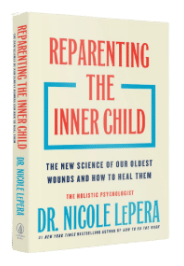
Find the book everywhere books are sold.
Transcript
….could just figure ‘IT’ out whatever “it” is then it’s gonna be smooth sailing and happily ever after.
And we all reach the place at some point where we realize that’s that’s not the case. So with the caveat of there’s no myth of arrival and life’s still life’s what is waiting for us on the other side of the reparenting journey?
Dr. Nicole: I love it. It’s a great energy to start our conversation. I’ve been looking forward to this. So thank you as always for the opportunity to not only connect with you, but your beautiful community and thank you really for the work you are doing to support so many others on their journey.
Simona: Well thank you for that Dr. Nicole. It is a treat to get to spend time with you again, and thank you so much. We’re really looking forward to hearing what you have to say on reparenting. So woo, woo, woo.
Dr. Nicole: All super excited. I’m very inspired by communities like your own. It is not an easy thing to break these cycles…
Simona: so where I’d love to start out is an orientation question. If you don’t yet know
Dr. Nicole LePera, she is also known as the Holistic Psychologist.
#1 New York Times bestselling author.
You may know her from her books:
How to Do the Work
How to Be the Love You Seek
How to Meet Yourself
or from her amazing Instagram, TikTok
You’re everywhere.
I just have learned so much from you over the years in your books and your newest book that’s coming up, is Reparenting Your Inner Child. And today we’re gonna be diving into all things reparenting. So the first place I wanna start with is for those folks that are not yet familiar with your work, or not yet familiar with reparenting, how does a person know that this is even a good next step for them?
Like to invest the time or to think about what is reparenting and why it matters to them.
Dr. Nicole: I really appreciate this question.
So, if this is you…if you continue to find yourself repeating habits, patterns, cycles.
This is for the many of us out there who we have so much insight, maybe so much awareness. We know what we want to change, yet we can’t seem to create that change no matter what we do. Those patterns and those cycles continue to repeat. We often then find ourself overtaken. I think that’s a really great way to describe it by reactions that end up feeling bigger, faster, immediate intense.
They have an all or nothing. Feeling about them. Oftentimes, again, these reactions are disproportionate, so to speak, than what the moment actually calls for. A lot of times, of course, these reactions I’m describing are happening in our body. So this is of course said for all of you out there who right are in a body that feels anxious, that has, a racing heart, a shallow breath, a lot of tension.
What that then translates to behaviorally is we end up with racing thoughts, all or nothing thoughts. We feel like everything is urgent and we’re either exploding outward, seemingly out of control emotionally, or maybe we’re on the other end of the spectrum and we’re collapsing. Right. We can’t seem to summon motivation to do anything.
And then of course there is so many of us that what we do in these dysregulated states is we try to control, we control the world around us, right? We might be the overachiever who looks fine on the outside, but internally we feel exhausted, depleted, and disconnected.
Simona: Mm-hmm.
I’d love to invite as we’re listening, to notice of all the things that Dr. Nicole just shared and listed, what’s resonating, what’s feeling familiar.
And then take a moment to notice what are the situations or the, perhaps relational patterns or patterns in life that seem to ping these spaces for you.
Because as we’re asking these questions with Dr. Nicole about reparenting, it may be helpful to bring to mind a scenario or pinpoint an adaptation that you’re navigating right now. And so take a breath, grateful that I’m the one editing, check my questions. now that we’re oriented to what we can be looking for, I wanna talk to what’s waiting for us on the other side of this work, because if it was easy to do it, we would’ve already all done it. And something that you talk about, and we can learn from neuroscience is for brains familiar equals safe.
So it’s a big ask to go on this reparenting journey and I would love to hear from you what’s waiting on the other side, but I wanna give a caveat first, which is so many of us, me included, when we step onto our healing journey, we have this:
” if I could just figure ‘IT’ out” whatever “it” is then “it’s gonna be smooth sailing and happily ever after.”
And we all reach the place at some point where we realize that’s that’s not the case. So with the caveat of there’s no myth of arrival and life’s still life’s what is waiting for us on the other side of the reparenting journey?
Dr. Nicole: Well, I will tell you what is not waiting for us, Simona, is done.
Right. I like to call this the utopian search, right? For where is this place where I’m, I’m done right? I’m done healing. I’m on the other side of it. Life. I think for a lot of us, we anticipate, expect, maybe hope, right? It becomes easeful, right? There’s no stress, there’s no upset. And so thank you for speaking to this myth of arrival because I think the damage it causes us, not only is it unrealistic, there is no utopian place of done of completion, but it really keeps a lot of us in a pattern of pushing, of striving, right, of doing. Instead of, I think what a lot of us need to do, which is pausing, regrounding, nurturing.
So to be clear, what becomes possible on the other side of a reparenting journey is not always being calm and regulated. What comes on the other side of it though, is increasing our capacity for moments of dysregulation or for discomfort. So in practical terms, what I mean when I say that is learning how to pause or delay what, for some of us might feel like an instinctual, compulsive reaction, something that we just can’t stop.
But giving ourself just a moment of pause so that I can begin to then make new choices. Choices that over time can begin to signal safety to my body, to my nervous system, so that the many of us who are experiencing, whether it’s anxiety or depressive symptoms, or shut down, or a hyper vigilance, where we’re always waiting for the next shoe to drop, and we feel like we’re always bracing for the next thing to happen, right?
We can actually, when we increase our capacity, we increase our ability to tolerate those sensations, so we lessen their experience.
And our mind, on the other side of a reparenting journey is we begin to turn the volume down on the inner critical voice that so many of us have running through our minds, criticizing us, tearing us down all day long.
Now, it’s not to say that that voice vanishes entirely. Because I could get into a bit later, this protective nature of these voices and these parts, these all are there for a reason. But what will happen over time is it’ll lose its authority. We won’t always believe what our inner critic is saying, right?
And so that we can then learn to act from a place that’s more in trust of ourself, that’s more secure, that’s more grounded. So in terms of our system than mind and body, we really begin to shift all of the energy that we use physiologically and in our mind throughout the day, from survival driven habits and patterns to ones that are grounded in safety and that allow for ultimately growth, evolution, and change.
Simona: Mm. So I’m hearing a lot of things, and as you’re taking this in and listening and taking notes, I’d like to invite you to reflect back on what Dr. Nicole just said. ’cause I’m not gonna capture everything right here, but I’m hearing. Plugging energetic leaks or time leaks that can give us more vitality in our life.
I’m hearing turning the volume down on unhelpful self-talk and also hearing that there’s not an a myth that that’s gonna be gone, but the volume comes down, the authority is down. And I’m also hearing for any one of us, which I think is probably every human that has those compulsion feelings of trying to protect ourselves in whatever way that is, whether well just so many of us have so many of our own variety, there’s a variety of things we go to.
So I won’t list them all off. I’ll invite us all to notice what our compulsions are in those moments and noticing that there’s a breath between those feelings, like “we must”, and knowing that we don’t have to and we can allow those feelings to dissipate. And I do wanna ask you a question about allowing those feelings to dissipate.
So I’m gonna write myself a little post-it so I don’t forget to come back. But I wanna go into another direction first.
So next question, Dr. Nicole. So many of us in our community come to this work later in life and so
I think it’s amazing TikTok Instagram, there are some really fabulous and young people who are like getting it so much earlier.
But for those of us that come to the journey later in life, there’s all the benefits that you just shared and there’s cool things as we are on the journey and more awareness, but then there’s also grief that we have to greet and not just grief for what we didn’t know or what we did know, but also for all the life that we lived and maybe even some of the cringey things that we can look back and we’re like, oh man, I didn’t know until I knew.
And so my question specifically is, what guidance or advice do you have for later in life self-healers?
Dr. Nicole: Yeah, I think I wanna first speak to the grief , and I’m even gonna throw in another emotion here, which is anger. Grief and anger are completely natural experiences, whether you’re quote unquote early in life or late in life, even though, again, I don’t really believe in those designators.
You know, change happens when, we come to the place in life where we are ready to welcome it. So regardless of when your journey happens, anger and sadness are such foundational emotional experiences because sadness really simply indicates when we’ve experienced a loss, right?
So if we come to the awareness of all of the lost time, the lost support, the lost aspects of our being. All of the things that we suppressed. Naturally, then it is completely understandable that we might feel loss, or sadness, or grief around that. And just quickly, quickly then spending a moment on anger.
Anger is a feeling, evolutionarily driven, meaning we all instinctually feel anger when one of two things happen.
When either our needs are going consistently unmet. And how many of us, again, what we wake up to, the reason why we come to the realization that we need to heal is because we see all of the ways that either from our parents or through habits that we’re repeating, our needs are still going unmet.
And so naturally then we will feel angry. We also very naturally feel anger in moments where our boundaries are crossed. And again, a lot of us have learned or have not learned, I should say anything about what boundaries are. So anger and grief are very natural, of course. Right? Depending on when we come to the healing journey.
And I will be the first to speak. When I was early, so to speak, in life around my thirties, when I came to the awareness of how much I couldn’t recall about my past, and the reason I couldn’t recall so much was because of emotional neglect I suffered in childhood, which created a habit of dissociation or simply disconnecting from life.
So the translatable then symptom. A lot of us experience, and I know a lot of listeners resonate with this when I share it, is we don’t recall our past. It’s as if whether it was last week or decades ago, if someone were to retell a story of a fun event even that I was, in attendance of, I wouldn’t be able to recall that memory.
So I will share my personal experience of how much grief I even in moments continue to experience when I look at three decades of life that I don’t have, right? The quote unquote memory to relive it. So, grief, anger, sadness, all very natural part of a healing journey. The goal then is getting, practically speaking.
We want to make space, make room, allow those motions don’t, you know, make ourself wrong or invalidate the reality of that loss or that anger that we are experiencing. And something else I wanna offer here that I referenced a bit earlier is all of these, whether it’s symptoms or the dysfunctional habits, the cycles that we repeat, some of us seeing them repeated across generations more often than not, if not always, those patterns are protective .
Mm. Right? So, no matter, again, at what age, when we come to the awareness that, wow, we’re repeating patterns that aren’t serving us. Instead of invalidating or shaming those ourself for, you know, having those habits, what we really wanna do is honor the fact that we needed to act or react in those ways because we had no other choices available to us.
Simply speaking, our nervous system did what it needed to do to survive. So on that then note, right, we then want to understand whether we’re healing early or later in life. Like I said earlier, healing doesn’t just happen by insight alone, by awareness alone.
If you are like me, you might not even regain access to the memories of what happened. So another thing I wanna offer here is we don’t necessarily need to know what happened. We can start right here, right now with the habits and patterns that are often driven from safety.
Behavioral adaptations [00:13:20] that are at one time, the only thing that I could do in these moments and what we want to begin to do then is… starting from our body, developing new habits that allow ourselves to be more calm, more grounded, that allow us to increase that capacity, right?
That I spoke about earlier. Mm-hmm. Not avoiding stress or discomfort, but learning how to cope with it. And the final thing I wanna end on is what aging gives us something that I have feared for a very long time because to me. Getting older just meant closer to getting to death. This thing that I feared for as long as I can remember, because of all the health anxiety in my family, what I’m coming to be aware of is age grants us wisdom.
It grants us lived experience. So I’m speaking to all of you out there who worry that it’s too late. Right? The ability and the opportunity to wake up and live more consciously with all of this beautiful wisdom that we’ve gained, hopefully now from a more empowered space of being able to create change by creating safety and security in our nervous system is I think one of the greatest gifts of, of growing, maturing, aging, whatever it is that we want to call.
Simona: Mmm. That is really beautiful. I wanna speak to a number of things that you said. The first place I wanna speak to. Let’s see. There’s a couple of things. There’s there’s the places where I wanna piggyback on, and then there’s this spot where I wanna name something, which is, you were talking about not remembering childhood.
And that is so common. But there’s also another piece that I wanna name in case someone’s listening and this is you, which is sometimes we’re so hypervigilant and we need to take note of absolutely everything because we know it’s gonna come back in another way. And so if you’re listening to this and you remember all the details, I just wanna normalize that one too.
And it doesn’t, sometimes we hear something and we’re like, oh, well maybe I didn’t have, maybe it wasn’t hard ’cause I remember it. And, and it just, it manifests differently for all of us. We all have our own journey and our internal communities and our adaptations, they adapt for the environment we’re in.
So I, I wanted to name that. Which I know you wouldn’t disagree, but I wanna make sure if someone’s listening, they’re
Dr. Nicole: Yes. I’m happy you’re naming that because I just wanna quickly give the science behind that, if you don’t mind. That is 100% true
The first stage before, we can’t recall, right, the kind of like end point that I’ve gotten to when we have a stressful or an upsetting experience and our body releases cortisol or adrenaline or all of those kind of activating hormones, for lack of a better word, those actually in the immediate moment of that event happening, it increases our ability to recall what happened.
Because from an evolutionary standpoint, it is so much safer for us to get every possible cue mapped onto this threatening thing so that I can remember it for the next time. One of those cues, right, comes into my present moment so that I can react really quickly. Yeah. So what you’re saying is very wise, it’s grounded in science, that the first step is actually we do become a hyper, right?
We become hyper aware. Of what’s happening to encode the fact that what’s happening is stressful or upsetting so that again, our system can remember it more quickly, the future time that this happens again. So you’re beautifully describing the natural process, which is actually, yeah, we more likely to remember something.
But then over time with that adrenaline and that cortisol continuing to course through my bloodstream, without it being metabolized as our body will want to do, then we start to get into that area of inability to recall, because then there’s too much of those hormones and then they start to impact a particular part of our brain called the hippocampus.
To be clear though, we are remembering regardless of if we can recall it, ’cause that’s what we’re having a conversation about, which is the memory living in my body, right?
The body that’s driving me instinctually into these actions or where I feel so overwhelmed in my body, I can’t stop the reaction. So to be clear, whatever side of the camp you’re on me. Oh, I don’t remember a thing or. I remember every detail of the thing. Your body is remembering it regardless of the end of the spectrum that you’re sitting on.
Simona: Thank you for that, that science behind it. And so I’d like to invite us all to just take a breath and then I’m gonna ask Dr. Nicole, before I go into my next question, I wanna talk about some of the things you just spoke to, but grounding myself and a breath.
One of the things you just mentioned was making space and room for all of the emotions in what I hear, what I was hearing you say when you said that, though you didn’t use this word, and I wanna just check in, which is the word accompaniment and simply not fixing or changing those emotions, but being with them.
And so often the first time we hear something like “being with” our emotions, it doesn’t feel like enough. It doesn’t feel like an activity, doesn’t feel like it’s gonna do anything. And I wonder if you can speak a little bit more to that.
Dr. Nicole: There’s one of two things that I think naturally come up, which is what you’re speaking to.
” What do you mean just be with them”.
In addition to the fact that a lot of the emotions that we’re talking about right. Have a, an agitated energy, so very naturally our body feels instinctually driven to do something, to move, to release it. Mm-hmm. I also think, again, there’s this other kind of thing that could instinctually happen. Well, one of two things, which is emotions. What emotions, right. If you’re like me, so disconnected from our bodies for so long, right? Even being offered that emotions live as sensations in your body, meaning they map onto things we can feel happening.
I think that there’s a whole population out there who doesn’t even know what it’s being talked about because little to no time is spent in, in the physical body, right? We’re in our head, we’re analyzing or maybe we’re always worried about other people and so we’re not. Paying attention to ourself. And then of course there’s the camp that even being offered the suggestion to be with emotions that are very clear of what’s going on in their body and what is going on in their body feels very overwhelming and is not anywhere that we wanna spend any time being present or accompanying.
Right. Being connected with. So then there’s, I think, that camp. So regardless of what camp you are in, what is important is two steps always of change. The first step is simply becoming aware of the pattern, right? What is the habit that you have, right? My habit is to be disconnected from my body, to spend little time there.
My habit is to not have the emotional, the resources to calm or soothe overwhelming emotions, or the habit, is to feel like I need to want to do more. Because all of those habits were things that we’ve learned to do. To manage emotions. They were things that were modeled to us. They were dynamics that were, you know, a part of our earliest relationships simply speaking.
Right? We learned those habits. And some of us have all of these rationalizations of why just being with our emotions isn’t enough or that it’s more important to analyze our emotions. And so the goal really is for a lot of us, most of us really, is to, we need to teach our body the tools to be with our emotions, right?
So whether or not you’re on your spaceship a million miles away, or it doesn’t feel like you’re doing enough, the goal is to learn how to shift that focus. Learn how to identify and be present to the different sensations in a body. And then. Teaching ourself that moment of pause so that when we make a choice, right, what are we going to do?
Are we actually gonna move our body to release the emotions? Are we gonna just slow our body and be with the sadness? Are we gonna reach out and ask for support to maybe co-regulate with someone else? Right? Then we give ourself the opportunity to break the old habit. So I think the important takeaway here is we all have an instinctual thing we do when we’re feeling emotion.
So becoming aware of that is the first step. And then the second step is quite literally we have to teach ourself how to expand that capacity that I keep referencing through new choices.
Which means then, not shaming ourself. I will always be the first to share. Right now I’m into my forties, so a decade past that moment of time where I came to this realization and
I’m a clinical psychologist, I can write books on emotions. I still struggle in moments when I’m having an emotion. Because my instinctual habit is to do what I always have done, ignore it. Right? Distract myself from some, with something stressful on my phone or with something exciting, right? Distract myself with the next task that I have to complete. Mm. So we have to again, see the pattern in action.
Not shame the fact that we might not have the tools to know how to be with our emotion. And really understanding that when we reconnect with our body, that there’s a whole world of sensations that are happening that we can learn to be more and more present to. But we’re gonna rely on those old habits we often distracting ourself if that’s the only thing we’ve ever known to do.
Simona: Mm. Thank you for naming that, Dr. Nicole. And even the, the pointing to the fact that it’s a practice that takes, that takes time. And if someone’s listening to this and they would like to learn those tools for how to feel their body sensations. Part of me wants to point them to your orange book: How to Do the Work, because I haven’t yet read your book that’s coming out, Reparenting The Inner Child, which book would you point them to?
Where would you point someone to who wants to go further with learning those skills that you were just talking about?
Dr. Nicole: Each of my books, I, I talk about, I mean, the emotional world is so foundational that probably every work I will put out from, from now until I’m no longer here will have some version of the conversation around a more body-based approach.
We’re not gonna ever, in any of my books, yeah, I’ll talk about patterns. I’ll give my, hypothesis or my theory about where they come from. But I’m hoping that a takeaway from my work always is, yeah, it’s helpful to know and see our patterns in action because we are very patterned habitual creatures.
Though, creating new tools, actions are always going to begin with reconnecting with my body, with expanding my capacity to be with the different sensations that are available. So no matter what work you pick up, you will have some, obviously conversation and tools to that nature.
Of course, the newest book, reparenting the Inner Child, has a whole roadmap has different stages of the reparenting journey. Each and every chapter actually for that matter, has holistic or body-based approaches. Always, again, beginning with first reconnecting with our body, right? Learning how to, throughout our day, notice how much attention we’re spending out there, or even in our mind, and how much attention we’re spending down here.
Noticing, well, how tense, or relaxed are my muscles? Maybe even now, taking this as a moment to check in, are you noticing that your jaw is clenched, that your shoulders are up to your ears, that maybe your stomach’s in knots, or do you. At ease and capable to, get up and go if you wanted to, or maybe you feel like you have no muscles, like you have no skeleton.
You couldn’t get off the couch if you wanted to, right? You’re almost too at ease that you can’t even summon energy. All of that is information.
So is how you are breathing? Are you holding your breath? If I ask you to just take a notice at your natural rhythm of breath right now, are you so constricted that you can barely feel your body breathing?
Are you heaving as if you’ve just run a marathon, but yet you haven’t gotten off your couch? Right? Same thing with our heart rate. We can notice by our heart rate elevating and slowing down throughout the day, these are sensations that we can begin to pay attention to. And then from that foundation, right, we can now start to expand and start to get curious.
Well. What happens in my body when I’m feeling that loss or that sadness or that grief that we were talking about earlier. Right? Might I notice a heaviness in my chest? Might I notice tearfulness in my eyes? Right? Might, might. I notice a quiver in my lips when I’m trying to talk, right? I get choked up.
Same thing with anger, right? And this, again, it might look and feel a little different. I’m just giving us through some possibilities or some kind of sensations. Yeah, that could map on. But the goal would be to use yourself, right? To refocus your attention and begin to explore moments when you’re angry, right?
Does it feel like your blood pressure’s through the roof and your hands are clenched and your jaw is clenched, and your voice is elevating in, in volume, right? These are things that throughout the day, we can begin to notice more and more of, and then instead of, which will likely happen. Feeling yourself instinctually wanting to scream as your voice is getting louder at someone else. That’s the moment where we’re not gonna shame that pattern because probably at some time, screaming and yelling and making yourself heard was the only path that you had to any version of safety then. Mm-hmm. But now that instinct isn’t gonna go away, but what we can begin to do is catch ourself before we act from that instinctual place. Pause. We might not know what to do. That’s a healthier thing to do in that moment. Maybe not screaming at someone else first turns into screaming into a pillow. Right? But I, I wanna emphasize this now too, [00:26:40] because if we’ve never practiced, I’ll speak for myself because I’d never practiced.
There’s still moments, like I said earlier, where I’m having an emotion and sometimes it’s a complicated one. It doesn’t fit neatly into sad or angry, right? I don’t know what I’m feeling. I’m feeling five different things at once. And so I have no idea what to do in those moments. So my first goal, is to not to do instinctually. ’cause often it’s our first reaction, that’s colored by those old habits. When we can just give our body a moment, our body, again, repeating our body. A moment to pause. To slow our breath, to maybe slow our movements, to maybe turn our voice down a little bit in volume, to maybe take a walk where I’m not just repeating the thing that’s upsetting to me.
I’m focusing on the sky, the grass. Then over time, I can get curious and say:
“huh, I don’t know what to do with how I feel. Let me see if this works. Let me see if that works. Let me see what works for me.”
So whatever book or actually free accessible content you pick up, that would be the conversation.
Tune into what do you normally do when you’re having an emotional reaction, because we all have those learned habits. A lot of times they’re dysfunctional and they’re hurting ourselves or our loved ones. The first then goal is to observe ourself
in real time pausing the reactions getting curious, and then creating some new, healthier, aligned tools to navigate those difficult emotional moments.
Simona: And I love what you’re speaking to there. Well, there’s so much that you named. So I’d like to invite everybody to take a moment to just jot down the notes that feel most important to you to capture and all that Dr. Nicole just shared in terms of putting these tools into action. And then through the filter of my ears and what I get excited about and what our community likes to talk about is our inner community.
And so I’m just hearing you talking so compassionately about, if we, we think about those sensations or circuits and systems, if we personify them.
The compassion I hear you talking to those like, “oh, sweet little one…. you wanna yell? I totally get it.”
And then trying something new. But with that theme of parenting our inner ones.
Being there. And you just over and over again, you’ve talked about that, the compassionate acceptance of this is how we knew how to do it. And that used to be our only tool, and now we get to consider maybe a new tool.
And thank you.
Dr. Nicole just mentioned something and I wanna make sure that folks heard it, which is yes, she has these fabulous books and her newest book coming out, but she also has so much free content available online. And so if there’s ever anything you’re hearing and you want to go further.
Thank you Dr. Nicole. I’m really moved by, even as famous as you are, you still come back to our community. As many books as you’ve put out.
You still always to make sure that there’s free resources and it’s it’s just really moving. And, and I thank you for that. So thank you for being you. I think it’s, I think when we have to have models of what’s awesome in the world, it
Dr. Nicole: Thank you.
Simona: helps our inner communities model the ways we wanna be. So I’m gonna grab tissue.
Dr. Nicole: Oh, I appreciate you and I’m so inspired by you, by the work you’re doing and facilitating in your own community, and by everyone out there listening,
I truly mean this when I say: it is such a brave journey to allow ourself to live in awareness of all the things that not only hurt us in the past, but of all the suffering that will ever be present in our world.
It’s a brave, courageous journey that you are each on. And I hope that my takeaway is always a version of what you’re reflecting back to me, Simona, which is compassion.
Everything that we are now currently struggling with has developed out of protection. Even that inner critic that might even be shaming you while you’re listening to me, speak right now.
Because that inner critic is a protector of a younger version of us, even our inner critic is not an enemy. Because at one time, even an emotion that’s so difficult to tolerate, which is shame, is a very evolutionarily natural emotion. It helps us prioritize and keep our connections intact.
So this inner critic and all of these crazy habits where we’re either, you know, pursuing endlessly someone to make sure that we’re loved or we feel so unsafe in any version of connection that we’re running away from love and support that’s ever available, and we’re criticizing ourself wondering why we’re broken or unworthy internally…
All of that developed because at one time shame and all of these protective habits wrapped around shame. What helped preserve our connections. And in childhood our connections are quite literally our lifeline.
So when you are sharing Simona, the wisdom and you saying: being present to, validating, not shaming this inner family.
That is for many of us where healing begins. Because we have to validate sometimes for the first of us in a lifetime ourselves. These broken inner parts of us and all of these crazy maladaptive habits that we’ve created. We have to see them as what they were our best attempt at survival when our resources we’re limited.
We have to validate these patterns before we can change them. These moments which seem so small of noticing patterns. Of pausing of not shaming ourself
Instead, maybe offering a word of validation. I see you, I know why this is here. Right? This is all you had to do at one time. I’m here to support you now.
Mm-hmm. Right. We wanna just like brush by, but those are the moments where healing happens, where we’re rebuilding trust in ourself. Or maybe some of us are for the first time ever showing up in connection with ourself. Being present to how we’re actually feeling. So compassion is always one of my goals with any of the work that I share.
Of course, I wanna give tools to change the habits and patterns,
but I do believe it’s in this understanding where we can maybe shift that lens from self-criticism to self-compassion. If that’s the takeaway of anything you, you take from any version of hearing me speak or write or however you interact with my work… my work will be done if I know that you can move forward with a little more compassion and understanding for yourself.
Simona: I’m about to ask you my second to last question, but I wanna let you know what’s coming after that is you talked, you talked about.
You talked about allowing ourselves to feel the discomfort for just a little bit longer.
And so my last question will be asking you how we can do that if we don’t already know. But my second to last question is this:
Back to what we were talking about earlier, in terms of a later in life or depends on when we arrive to our journey’s journey. There are some folks in our community that are parents of older teens, or young adults, or even full adults, and they’re coming to this work later in life.
So for listeners that are reparenting themselves while realizing that they already leaked some of their material onto their kids, there’s a couple things that can come forward:
… worrying about, is it too late to repair? Is it too late to course correct? Is there anything I can do? And you’ve worked with tens of thousands of people in your Self Healer’s Circle and so you have a lot of real world experience.
One thing I wanna say also, I love to caveat my questions, is that we can’t do anything.
We can’t change another person and, and so I wanna be able to offer, I would, I wanna ask you what a person can do as they are parenting, as they reparent, but I also wanna balance it with the complexity of how tender this question can be.
Dr. Nicole: Yes. The first thing I wanna say to anyone in any caregiving role, of young children included… is I want to celebrate you. You are quite literally doing two jobs at once. I mean, the enormity of the job that is to parent or to show up, right? For a dependent developing, creature that is an infant is so huge. And chances are you are showing up to parent in circumstances where more than likely in your own childhood, you might not have been parented to the degree that you needed.
You might not have had the attuned caregiver to meet your physical and emotional needs. So saying that to then say, children, any of our relationships though children especially, will activate the suppressed parts of you.
Parts of you that are below your conscious awareness, parts of you that you haven’t even met yourselves.
And so these moments of being triggered of being activated by our children they’re normal, natural human moments. We’re going to be activated by anyone else that we’re interacting with, and that includes our children. That is a relationship just like any other relationship. And it actually is a relationship that you are solely responsible for all of the needs in that dyad.
So when I say the task is enormous,
I am so wholeheartedly meaning that.
So being triggered, being activated at any part of the parenting journey is to be expected. especially when you yourself weren’t parented or didn’t get the support you need. And this makes me think back to when I was in private practice and I did individual work with clients, and I had many clients that were in very early stages of whether it was pregnancy or just having had a newborn care of an infant. And they would come in and very, with so much shame, they would very bravely, these parents often report to me, these moments of reactivity, of being angry, of reacting in a way with their child. Or just being tired and not being, wanting to show up at all times.
And they would relay these very normal moments with such shame. And so the thing I wanna speak to here is if you are a parent, or again, in care of any individual or any, you know, within any relationship, it is so normal to feel angry, even resentful of having to show up to care for another individual, even your own child.
Especially if in your own childhood or even currently now, in today, real time, your physical, emotional needs aren’t being met. Because it activates that young part of you that’s like. Well, I need to now show up and care of you and who’s taking care of me? No one ever took care of me.
Dr. Nicole: so when we are right, doing the two jobs of parenting another or caring for another and also trying to reparent ourselves, the importance of modeling or of developing, which is the journey for most of us, emotional maturity begins with identifying and meeting your own needs. This is where the cliche that many of us love to hate, right? You can’t pour from an empty cup, could never be more true. And I spent a lot of time of course talking about this in my last book, How to be the Love You Seek.
Where I make a case that we fully can’t show up in service or care or love for another, our children include it, if our cup isn’t full. So the final thing I wanna say to anyone, parenting anyone is: modeling.
Children are gonna be much more impacted, not by saying the right things, not by reading the right books, wink, wink. And delivering the right lines, but by showing up, right?
In a calm ground at state, which means by navigating moments of disagreement, of conflict, of dysregulation. Because all of that is completely normal in relationships. So right as we’re coming to awareness, we’re reparenting ourselves. We have children, maybe our children, depending on what age they are, they’re pointing out things, maybe they’re sharing how they’ve experienced us, and we’re hearing things that are very uncomfortable.
The work in those moments is to make space for how I felt, right? Maybe allowing myself the grace that as the parent, I didn’t have the tools. I don’t have to shame myself. Hopefully, as we’ve been talking about throughout this conversation. With this awareness, we can feel a little shameful. In those moments where as a parent say, we’re overreacting, we’re screaming and yelling and saying things we don’t mean to or want to say to our children.
Or maybe you’re like my mom, you’re disconnected. You want to be more connected to your child, but you just can’t seem to create those bonds. So we’re not gonna shame that habit or pattern. We’re gonna say, okay, chances are those habits developed because in my own childhood, I didn’t have the resources, the ability.
No one modeled for me, or taught my body how to be calm, how to be present, how to deal with difficult emotions, how to navigate conflict.
So now what I can do, so to answer the question I heard wrapped in there, there is never too late. We now know verified by science, our bodies, our brain can change through neuroplasticity. We can fire and wire some new neurons together at any time. Which means no matter how old, you very courageously inspire yourself to create new actions or change as a parent.
The impact is going to be so great because what your child will see you do is changing. They will experience you different over time. Yeah. There, there might be space needing to be made for the discomfort for you to hear, maybe how your child experienced you in those moments [00:40:00] where you couldn’t show up as the parent that you know you can or want to be, but in those moments of repair, because that’s what repair is coming back together, allowing someone else to share your experience even when it’s uncomfortable.
And I will be the first to say, I don’t have children, so I can’t imagine. But when someone that I love very deeply, like my partner shares with me a moment where they were maybe disappointed in my reaction. It is so incredibly difficult for me to tolerate hearing that because naturally I don’t wanna disappoint someone I love, I wanna always show up in support of that.
But that is what it takes, the capacity that we’re talking about can be modeled even in those moments. Hearing something difficult. Maybe your child is sharing with you a memory that it was a little different from you. And it could have been because no two individuals will have the exact same perspective on an experience, but it doesn’t mean because it wasn’t remembered or experienced that way for you that you have to invalidate maybe how your child experienced you.
And in doing all of this, like I said earlier, doing the two jobs, what you are modeling is new patterns of action. You’re modeling conflict resolution and difficult conversations and increased capacity. Where there was once none of that. And that change is what then carries on for decades.
Simona: Wow, wow, wow. Dr. Nicole just said a lot of things and I want to pull up some of them. The first thing I wanna make sure everyone got to hear is that neuroplasticity is on our sides and on our children’s sides. And so that was such a big deal. And, and so there were a lot of things and, and if as you’re listening, there might be some tender pieces, that idea of having to hold space as an an older child is offering feedback that feels really that, that our defenses are showing up that’s very uncomfortable.
And so I want to make sure that if in that discomfort we all heard that neuroplasticity is on our sides and on our children’s sides. And some of the other things I heard
Dr. Nicole speak to were the idea of, and so many of us were conditioned that the idea of self-anything is selfish when she was just talking about resourcing ourselves so that we can learn these new skills so that we can show up and modeling.
And so there was a lot of really powerful pieces of wisdom in what Dr. Nicole just shared.
But it’s so natural for our brains when we’re feeling all the mixed feelings, especially on a topic that this tenders this one. It’s natural for us not to be able to hear everything the other person just said. So I want to pull forward one last time:
We get to model new things.
We get to hold new spaces.
We get to learn new skills.
And speaking of learning new skills, as we begin to end our time together,
Dr. Nicole, this question will be for everybody listening. So the book, it offers science, it offers frameworks for reparenting. Is there one actionable reparenting practice that people can begin with today that can move the needle on that allowing space for discomfort just a little bit longer?
Dr. Nicole: Yeah, and you’re probably gonna hate that I always come back to this foundation.
But to move the needle in any direction or to create change in any direction, whatever it might be for you individually, none of that is possible without safety. Mm-hmm. So if one takeaway, it would be twofold. Again, always beginning with the awareness of noticing, even in this moment, how safe your body feels.
Those three checkpoints, our heart, our breathing, and our muscles are great places to start. A safe body feels at ease in their muscles, isn’t feeling tension, constriction, pain. Right? It’s feeling again that connected in a body, not feeling like you’re crawling out of your skin.
A body that’s at ease, is breathing slowly and deeply, and your heart rate is its normal rhythm. So with that awareness, if you are someone who maybe as we went through those quick checkpoints earlier,
‘oh no, I have all this tension, all this agitated energy, I’m holding my breath, I’m breathing so quickly, my heart is beating through my chest, or I can’t even feel my heart’
Then this practice is something that you want to log. That checkpoint is part of the practice. Making times throughout your day, maybe setting a couple alarms right now and your cell phone, you know, for a couple random moments. And when that alarm goes off, you could take yourself through just as we did.
How am I breathing? How are my muscles feeling right now? And how is my heart? And if and when, as many of us will, test positive for stress in those moments with tension, with constriction, then we can begin to build that safety, which is foundational.
Not being present, won’t allow us to even be present to the discomfort to learn healthier ways to navigate that. So some ways that we can calm ourself down. Some of us can feel very grounded by placing hands on our body. And this is where I invite you to be curious and see what you feel most comfortable doing. Some people just like laying your hands gently on your lap so you can feel the weight of your arms.
Maybe you wanna place some hands on your belly. I know I feel really grounded when I have one hand on my belly and one hand on my chest. For me, that feels very sturdy and reminds me I’m in a body, reminds me from my belly that I wanna be practicing feeling that belly expand with each inhale.
Exhale and drop my heart. I’m always trying to stay connected to my heart, spending so much time again in my head. So for me, those are great anchor points. Even just placing our hands, I mean our feet, excuse me, on the, the floor beneath us, maybe standing up a little taller so that you can really feel the weight.
Of your body pressing in your heels on the ground. Or if you’re laying, you can notice or sitting any point of contact. Your legs, your lower back are being supported as mine are are by a comfortable couch right now. I can turn my attention to those anchor points. Maybe if you’re laying, you can feel all of your weight really spread out and the bed or the ground beneath you.
Supporting you. We can begin to, to lower our breath. If we’re someone who’s noticing our breath moving very quickly, right? Sometimes just elongating or making that exhale a little longer than your inhale. If we like to count, sometimes that’s helpful. Breathing into a count of three, breathing out to maybe a count of four or five.
Again, not to the point of discomfort, but anytime we can lengthen that exhalation, that’s gonna send a signal of safety to our body.
We can do, a quick sensory check-in. What that simply looks like is sometimes our body might not feel fully safe, so we can use our environment and really just notice what we’re taking in with our senses.
Naturally our body is doing that, so now we could be a little more intentional. Right. Just maybe inviting you now to scan your environment and just noticing one or two things. Maybe even just logging what they are that you’re seeing. Right? I’m seeing bright lights, I’m seeing a camera. You maybe repeating to yourself what you are seeing.
Maybe noticing. Is there any aromas in the air? Do you smell something being cooked in the kitchen downstairs or maybe you lit a candle and it’s wafting. Right? Same thing with sound, maybe with taste. If you’re drinking something or eating something, this is a great time to practice doing so consciously.
Not just shoveling the food or drinking the coffee. So quickly. Actually seeing if you could tune in to the different taste. And so those are right. Really simple back pocket type practices. Again, another thing our body naturally does, our voice included. The more stressed we get, the quicker we begin to talk and move.
So even a quick shift towards safety could be, if you notice you’re frenetically running around your house and sweeping so quickly, slowing down your physical movements. If you’re noticing as you’re talking to someone, you’re starting to talk really fast, slowing down your voice. All of these are, small shifts that happen when first we tune into notice:
‘oh, I’m moving really quickly. I’m talking really fast. I have all this muscle tension.’
I can release, I can slow, I can ground, I can notice, I can elongate. All of these things are, they are not magic wands. I wanna continue to repeat that. The goal is consistent practice consistently noticing. As your body is becoming more stressed, dysregulated, upset, whatever the emotion is, not worrying about decoding, figuring out why you’re feeling that way or what you would even call the emotion you’re feeling.
Right? Forget all that. Be with the feelings. And in time, teach yourself, practice shifting them through those small little choices. By slowing, releasing, lengthening, grounding, paying attention, attending, the more consistently you build that foundation of safety, right? You’re wondering, why am I talking about safety?
When you wanna know how to deal with uncomfortable emotions, that’s how we get there. So now I can start to be present to all of the different sensations and right this grief, this grief, anger ball, or whatever it’s I’m feeling. And now I can not be impulsive and reactive. I can start to more consciously and intentionally find healthier outlets for whatever it is that I’m feeling.
Simona: Thank you Dr. Nicole.
And I’d like to invite you right now to notice, scan your body and notice how you are feeling in this moment. Notice what, of all the things that Dr. Nicole just spoke to could be a practice that you might want to consider offering yourself from yourself to yourself.
Tomorrow, the next day maybe set an alarm to try that maybe three times a day for the next three days and see how that feels.
And, oh my gosh, Dr. Nicole, it is such a treat and an honor to spend this time with you.
You can find Dr. Nicole on social media everywhere at The Holistic Psychologist.
Her new book, Reparenting the Inner Child is going to be available everywhere books are sold. Woo, woo woo. And I love… you have all your how to books and they all had a similar look and now you have this whole new, oh, I just, it’s very fun.
It’s very, very fun. And for me, born in and raised in the seventies, it just has a full on reparenting vibe to my, my roller skating seventies self. So I’m
Dr. Nicole: loving. It was, I’m happy it’s translating and you’re getting it. We did wanna have a different look, I think about this as different from that series.
And that was definitely the look of kind of retro, iconic. I’m hoping that this book really does live on as a, an owner’s manual really for how we developed, why we’ve become who we’ve become, and of course how we can create change, which is what I’m always looking to empower readers, listeners. Humans really to do.
Simona: Yes. Well, I’m looking forward to diving with the science, with the frameworks, with the tips, and with that signature Dr. Nicole compassion. And so Dr. Nicole, thank you again for joining us and it was personally a treat to spend this time with you.
Dr. Nicole: As always, I look for every opportunity to collaborate with you and your beautiful community.
Simona: thank you Dr. Nicole. This was a treat
Dr. Nicole: Thank you so much. I appreciate you and I hope you have a beautiful weekend.
Simona: Bye.
👉🏼 Check out the summary on the blog
